The fixed costs, in the order they surprise people
Property tax comes first because it is the largest and the least negotiable. Columbia County towns levy county, town and school taxes on assessed value, and the school portion is usually the biggest line — which is why two similar houses a few miles apart can carry different bills. Whether a second home qualifies for the STAR school-tax relief depends on primary residence; most weekend houses do not. Ask for the current tax bill on any property before you fall in love with it, and read it line by line.
Insurance is the second surprise. A house that sits empty for stretches, near water, with a woodstove or an older electrical panel, is underwritten differently from a primary residence. Carriers will ask about vacancy, winterisation and who checks the house. Honest answers cost less than a denied claim.
Then heat. Much of the county is beyond natural gas, so period houses run on oil, propane or electric heat pumps, and a drafty colonial can burn a striking amount of oil in a cold February even at a setback temperature. Budget for keeping the house above freezing all winter — the alternative, a full drain-down, is cheaper to run and more expensive to get wrong.
The seasonal costs
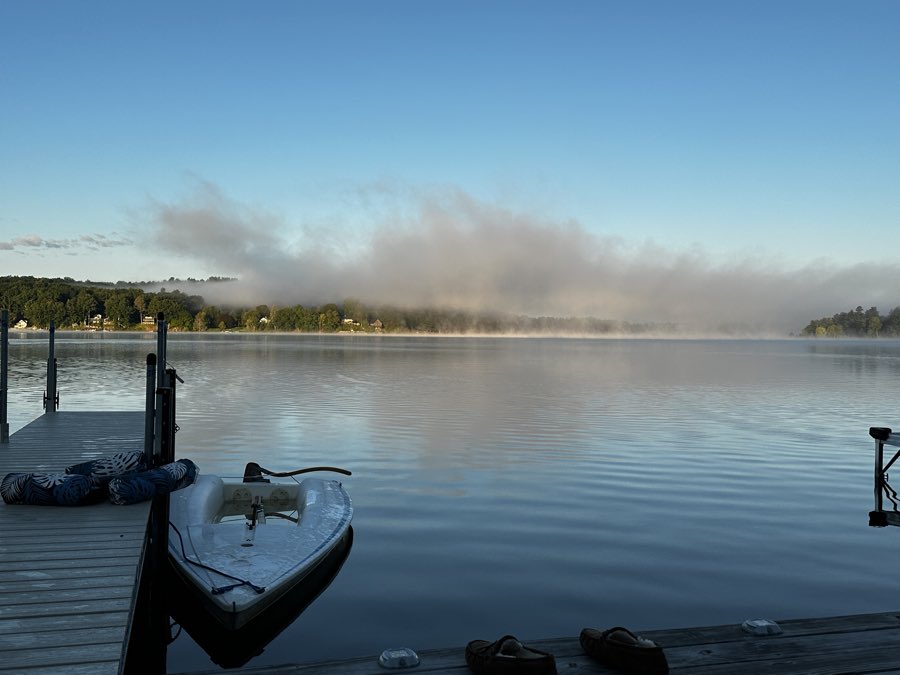
A lake house has a calendar. The dock goes in and comes out. Gutters are cleared before the leaves and again after. Driveways are plowed on a contract or by the hour, and a long private drive is not cheap either way. Lawns and fields are mowed or brush-hogged. Chimneys are swept. Each of these is small; together they are a second mortgage payment for a house on a big parcel.
- Dock installation and removal, spring and fall
- Plowing and sanding, by contract or by the storm
- Mowing, brush-hogging and fall clean-up
- Chimney, furnace and generator service
- Opening and closing the house each season
The costs of not being there
Everything above assumes nothing goes wrong. The costs that hurt are the ones that arrive while you are two hundred miles away: a frozen pipe found a week late, a storm-downed tree across the drive before a guest arrives, a furnace that quits on the coldest night. The difference between a small bill and a large one is almost always how fast someone who can fix it is standing in the house.
That is the case for a caretaking arrangement, whether it is a neighbour with a key or a formal plan. It is also why the property-care service on this site is built around a published response time rather than a list of chores.
A way to think about the total
Owners who have done this for a few seasons tend to land on a rule of thumb: set aside a percentage of the purchase price every year for taxes, insurance, utilities and upkeep, and a separate reserve for the one thing that breaks. The percentage varies with the age of the house and the size of the land; a new build on an acre and a 1790 farmhouse on forty are different animals. What does not vary is that the number is real, and that it is better known before closing than discovered in the first winter.
If you want that number for a specific house, ask. A property-specific estimate is part of what a valuation conversation covers.
Sources + further reading
- New York State Department of Taxation and Finance — STAR eligibility ↗
- Columbia County, New York — Real Property Tax Service ↗
- U.S. Department of Energy — home heating guidance ↗
The Upstate Edit is an independent editorial perspective by Matthew Nolan. Market information is educational, may change and is not a guarantee of future results.
The Upstate Market Brief · August 2026
What actually sold, against what the algorithm said.
One monthly brief on Columbia County, Copake, Dutchess, Greene, Saugerties and Windham: share of asking, days on market, inventory, and the gap between the automated estimate and the sold price.
Get the brief